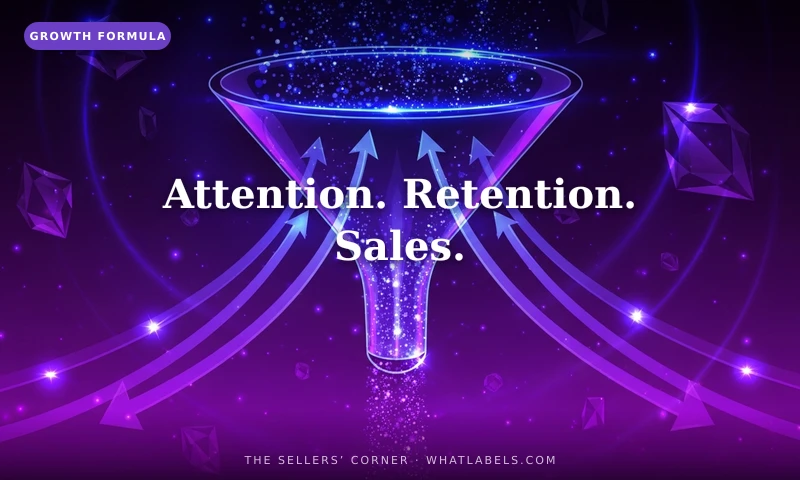
There's a three-word formula that the fastest-growing Whatnot sellers live by: Attention, Retention, Sales. In that order. Get people's attention. Keep them in your room. Then — and only then — sell to them.
Most new sellers get this backwards. They obsess over inventory and pricing but can't figure out why nobody's watching. The order matters because each step enables the next. Here's how to execute each one.
Step 1: Attention — Get People in the Room
Nobody can buy from you if they don't know you exist. The first job is visibility.
Before Your First Show
The biggest mistake new sellers make is going live cold. The sellers who explode out of the gate spend weeks building their presence before their first show:
- Be active in other sellers' chats. Not spamming — genuinely engaging. Become a familiar, friendly name in your category.
- Moderate for established sellers. You learn the platform mechanics AND their audience sees your name every night.
- Sponsor giveaways on other shows. This gets your name in front of hundreds of potential followers with zero risk.
- Schedule your first show 2-4 weeks out. Give people time to bookmark it. Promote it on your socials. Build anticipation.
Your first three shows are the most important from an algorithm perspective. Whatnot's algorithm rewards strong early performance — high viewer counts, active bidding, repeat viewers. A strong launch means organic discovery. A weak launch means grinding uphill.
Paid Promotions: When They Make Sense
Top sellers treat early promotions as a business investment, not an expense. The math is simple: promotions get people in the room. More viewers means your show appears higher in the category. Higher placement means organic viewers find you. Those organic viewers become repeat buyers.
One seller shared that his number one all-time buyer — a six-figure spender — originally found his show through a platform-wide promotional event. That single discovery paid for every promotion he'd ever run, many times over.
Once you've built a loyal following, you can pull back on paid promotions. Community boosts from your existing buyers become more effective than self-promotion.
Step 2: Retention — Keep Them Watching
Getting viewers in the room is half the battle. Keeping them is the other half. And this is where most sellers fail.
Your Energy Beats Your Inventory
You can have the best inventory in the world, but if your energy is flat, people will leave. Live selling is live entertainment with a transaction at the end of it. One seller described getting hooked on a show selling live crabs — a product he had zero interest in buying — purely because the seller's energy was infectious.
The takeaway: people stay for the experience, not just the products.
What Makes People Leave
Track your viewer count in real-time. Notice what makes the number go up and what makes it drop. Common viewer killers:
- Yelling "BID!" every four seconds
- Berating or scolding the chat when prices are low
- Running too slow — dead air kills momentum
- Running too fast — people can't keep up and disengage
- Ignoring the chat — if people feel invisible, they leave
Compare that to what keeps people glued:
- Welcoming new viewers by name
- Celebrating when buyers get good deals — instead of being upset about low prices
- Sharing personal stories (without oversharing — you can be personal and still private)
- Running a clean, respectful show that people feel comfortable bringing friends to
- Kicking out disruptive people quickly — don't let one bad egg ruin the vibe for hundreds of good ones
Giveaways: The Retention Tool (Used Right)
Giveaways are the most debated topic in live selling. Here's the framework that works:
- Think of them as loss leaders, not charity. Every business has marketing costs.
- Structure them financially. Know your giveaway budget per show. Track whether giveaway shows generate more total revenue than non-giveaway shows.
- Time them strategically: start of show (attract viewers), middle (retain them during slower segments), end (reward loyalty).
- Bigger giveaways = higher viewer count = higher category placement = more organic discovery. The ROI isn't the giveaway item — it's the visibility.
After inventory, giveaways are often a top seller's second largest expense. The ones who track the ROI keep doing them. The ones who don't, stop too early.
Step 3: Sales — Convert Viewers to Buyers
If you've done steps 1 and 2 right, sales happen naturally. But there are still levers to pull:
The "New Buyer" Metric
Your most important notification isn't a big sale — it's "New Buyer." That means someone who was watching decided to trust you with their money for the first time. Your job now is turning that first-time buyer into a second-time buyer.
How? The customer experience doesn't end when the item sells. Ship fast. Pack well. Include a thank-you note. Make the unboxing experience match the energy of your show.
Dollar Starts: Risk vs. Reward
Starting auctions at $1 is a calculated decision, not a default. If you're a new seller investing in growth and you can absorb some losses, dollar starts create excitement and urgency that higher starting prices don't. But if you need to protect your margins, start items at the price you'd be happy selling them for. There's no shame in that — Whatnot isn't a one-size-fits-all platform.
Be Passionate About What You Sell
If you're selling shoes but you barely like shoes, your audience will sense it immediately. The sellers who build massive followings are genuinely excited about their products. That passion is contagious — it's the difference between a viewer thinking "I'll check back later" and "I need to stay and see what's next."
The Bottom Line
Attention → Retention → Sales. Get people in the room (promotions, giveaways, community presence). Keep them there (energy, engagement, authenticity). Then convert them (great inventory, fair pricing, incredible customer experience).
Do it in that order, and the numbers follow.
Focus on your show — let WhatLabels handle the labels. Start your free trial →